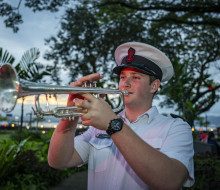
Taupō trumpeter in demand in brand new career with Royal New Zealand Navy Band
26 August 2025
Unfortunately you are viewing this website on an outdated browser which does not support the necessary features for us to provide an adequate experience. Please switch to a modern browser such as latest version of Google Chrome, Mozilla Firefox, Apple Safari or Microsoft Edge.
Ngā mihi nui
Leading Hydrographic Survey Technician Renee Mullins has transferred a love of being on the water and marine science to a career in the Navy.
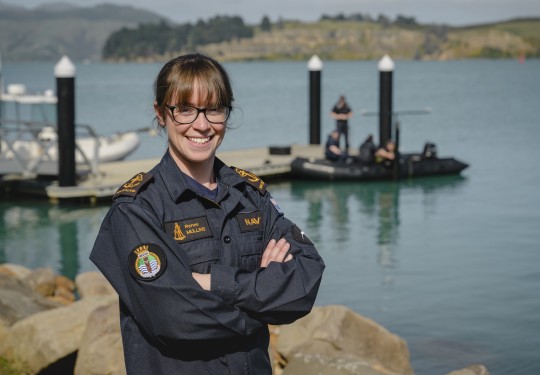
From Heyward Point in Dunedin, Renee joined the Royal New Zealand Navy following a suggestion from her science teacher at Otago Girls High School.
“I loved being on and around the water and spent a lot of time sailing on Otago Harbour,” she said.
“At high school I did a lot of the marine science side of things and really enjoyed it. I had a science teacher who suggested maybe the Navy offers a combination of both being on the water and marine science. That’s how I found hydrography over all the other things I could have chosen.
“I spent the first year in Basic Common Training and then a year at sea focussing on the seamanship side of things before starting surveying as a trade at HMNZS Matataua at the Devonport Naval Base in Auckland.
“I've had some pretty good opportunities and travelled the world a little bit. I've been to a couple of different islands now, Nauru being one of them. I also did RIMPAC in 2020, and I’ve had two years sailing with the Experiential Leadership Squadron sailing with new recruits and promotional courses.”
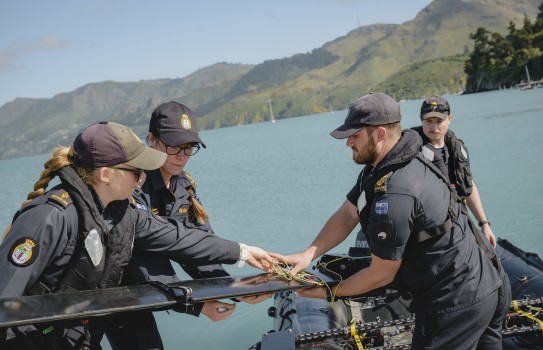
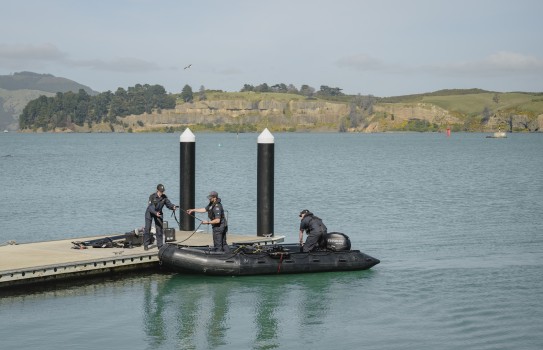
At the beginning of 2024, Leading Hydrographic Survey Technician Mullins came back to surveying, work which has recently seen her return to her hometown of Dunedin as her tightly knit team conducted boat ramp surveys in Nelson, Christchurch, Dunedin and Bluff in preparation for potential future operations of
In partnership with New Zealand Customs, the Royal New Zealand Navy operate two Uncrewed Surface Vessels (USVs) ‘Tahi’ and ‘Rua’.
(USV) in the South Island.
The Navy’s newest USVs, named Tahi and Rua, are seven metres long and weigh one tonne. They can be transported by ship, air or by road on a trailer and are renewably powered by solar, wind and wave energy, giving them a three-month mission endurance and unlimited range. This means they can stay at sea for long periods without support.
While the Navy has no current plans to operate the USV from the South Island, the survey would ensure it could do so if the need arose.
Acoustically silent, they are particularly suitable for conducting surveillance and reconnaissance operations and are packed with sensors, radar, camera and communication equipment. While at sea, they are monitored 24/7 by Navy personnel in a control room at the Devonport Naval Base.
If there was a message Leading Hydrographic Survey Technician Mullins would give students at Otago Girls High thinking about a future career, it’s to consider the Navy.
“I’d tell the kids at school it’s definitely worth it. It gave me the opportunity to work, learn and travel and earn money without the pressure of university.”
26 August 2025
16 October 2025

09 October 2025
07 August 2025

05 July 2024
09 October 2025
02 October 2025

22 September 2025
10 September 2025