OP WHIO
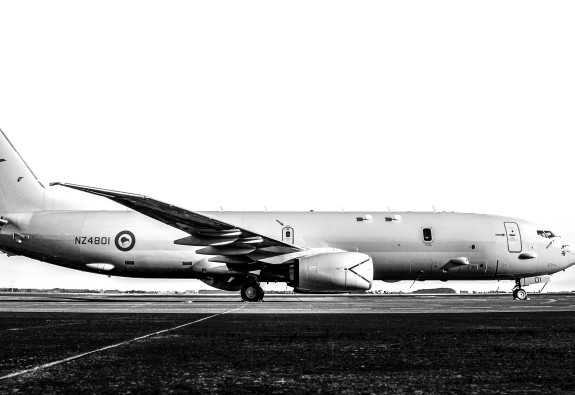
In the waters around East Asia a small team in a P-8A Poseidon carries out a dynamic mission of airborne surveillance, capturing evidence of violations of United Nations sanctions against North Korea.
06 November, 2025
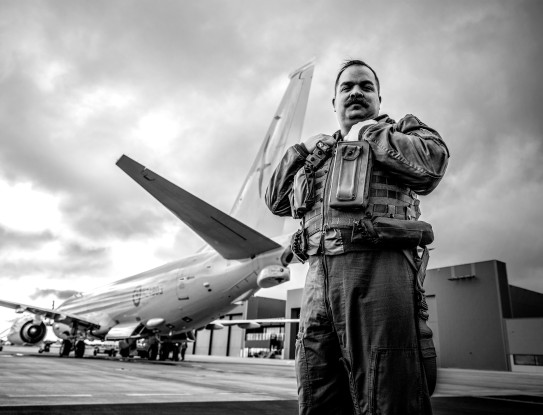
The crew is watching for signs of illegal ship-to-ship transfers of resources to and from North Korea in contravention of United Nations Security Council Resolutions. It’s a challenging mission, with those looking to violate sanctions in theatre doing their best to avoid the sharp gaze of the Poseidon crew. Air warfare officer Flight Lieutenant Hemi Frires says the No. 5 Squadron crew work together with the Enforcement Coordination Cell (ECC) based in Japan to make the mission a success.
This mission is one of the most challenging, most dynamic ones that we encounter and when we get on task up there it is busy.
Flight Lieutenant Hemi Frires
The operation, Op Whio, is beset with risks from vessels below, with the constant threat of lasers pointed at the aircraft’s crew.
“This mission is one of the most challenging, most dynamic ones that we encounter and when we get on task up there it is busy. It’s impressive to see a crew that is really switched on.
“There is a really robust risk management plan that goes into this activity. Fishing boats with visible lasers are mostly a threat at night because they can dazzle pilots better than during the day,” FLTLT Frires said.
"The crew is mission-focussed for hours, which is a challenge for such a sustained period.”
The crew monitors imagery, locations and activity of vessels of interest, with all information contributing to the intelligence picture of the area, FLTLT Frires said.
“That can be seeing a laden oil tanker sitting low in the water and then seeing it again a week later and noting it is no longer laden. If it hasn't conducted a port visit the implication is maybe it has done a ship-to-ship transfer and offloaded oil to other vessels while at sea.”
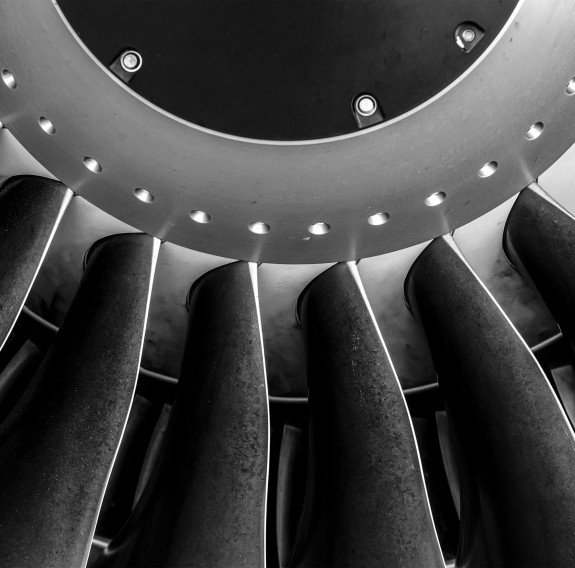
The aircraft is kitted out with a powerful camera, to capture details of vessels, but the Poseidon can also fly slowly and low enough for crew to see evidence of any rule-breaking.
“If we see a ship-to-ship transfer we take a photo of it and send it off the plane to be reported. In a couple of hours, it has allowed the ECC to turn that around and drive the next day's tasking and flying in a meaningful way.”
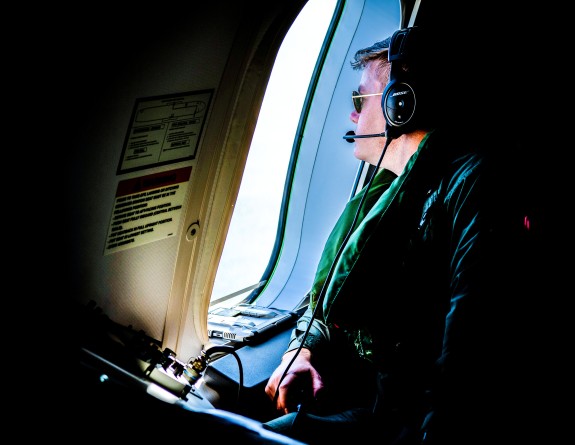
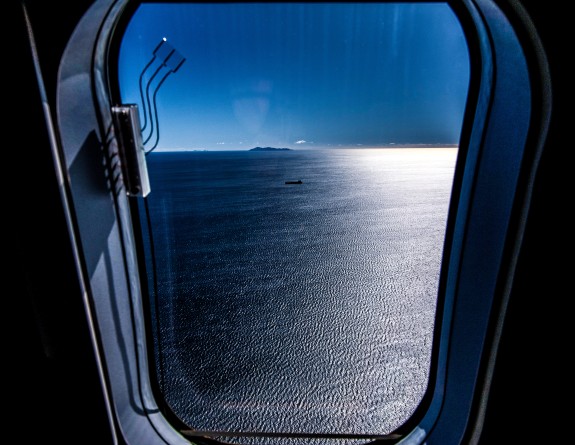
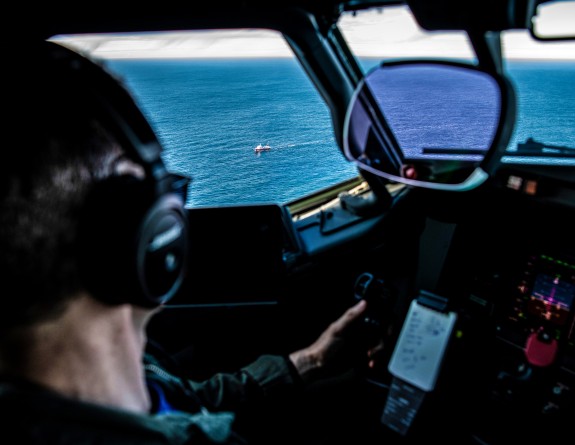
When the crew is working hard and the job is completed, the mission is rewarding.
Flight Lieutenant Hemi Frires
“We understand why it's important that we're doing it and why we are committing time to being away from home and family in a challenging environment and working really hard because we understand the impact it has,” he said.
“And it's not just the impact on supporting the UN, but it's also understanding that this is good for New Zealand and the New Zealand Defence Force to be out there working with partners and delivering outputs, not just for the Air Force, but for the government in the global community.”
Operation Whio 2025 | Royal New Zealand Air Force
Behind the scenes: Ghosts in the machine
Gathering imagery of vessels violating United Nations sanctions against North Korea is one side of the coin for Royal New Zealand Air Force personnel participating on Op Whio in Japan. The other side belongs to intelligence and communications experts, who provide mission support to flying operations and conduct the analysis of the collected data in order to provide post-mission reports to the Enforcement Collection Cell (ECC), Headquarters Joint Forces New Zealand and partner nations.
The Deployed Poseidon Operations Centre (DPOC) is a detachment made up of Intelligence specialists and Communications and Information Systems technicians.
There are three Intelligence teams.
The pre-mission team begin their day in the early hours of the morning. They will gather the daily tasking from the ECC and any other information required by the crew, such as the situation within the area of operations, target vessel positions, and the weather. The information is compiled into a brief for the crew.
Once the aircraft takes off, the flight-following team steps in to provide updates to the aircraft and collates data and reports received throughout the mission. For example, when an image of a suspicious vessel is captured, it’s transmitted from the aircraft and a report is produced for the ECC and other agencies.
We are like a ghost in the machine.
Flight Lieutenant Craig Harnett
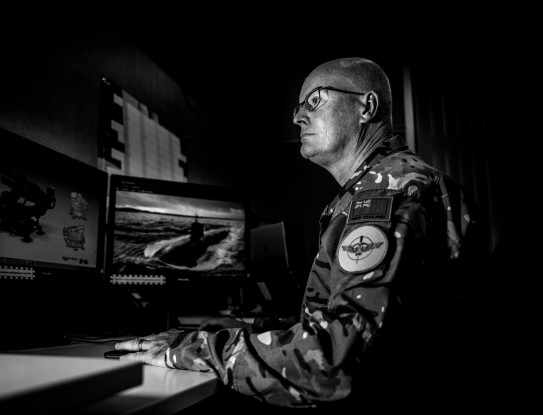
“We can effectively be present on the aircraft even though we’re not physically there because we can communicate directly with the crew, provide real-time updates and receive data throughout the flight," intelligence officer Flight Lieutenant Craig Harnett said.
"It's engagement with the mission as it's happening."
Finally, the third team arrives shortly before the aircrew return, analyse the information that has been gathered, debrief the crew and produce post-mission reports.
“It's been an exceptional team that I’ve worked with over here. Everybody knows their roles and they all work hard to support the mission,” FLTLT Harnett said.
“The deployment with the
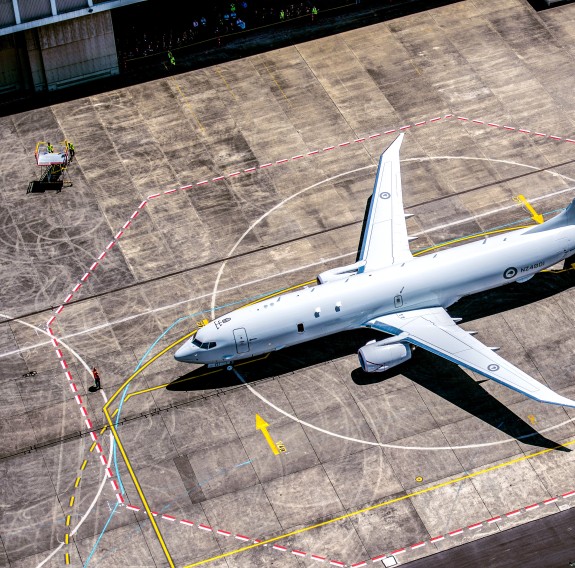
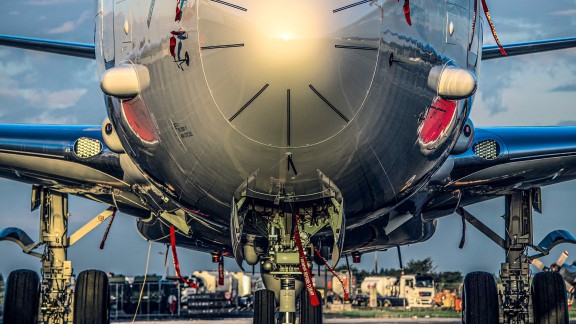
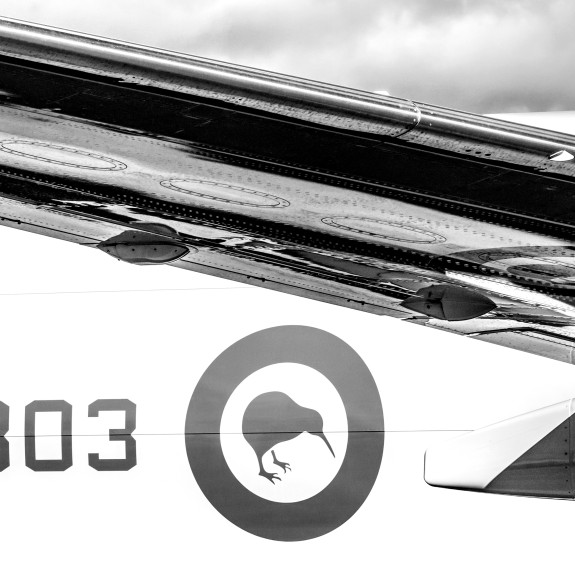
New Zealand’s Airborne Surveillance and Response Force (ASRF) is provided by No. 5 Squadron. After the retirement of the Air Force's Lockheed P-3K2 Orion aircraft in early 2023, No. 5 Squadron is now operating four Boeing P-8A Poseidon aircraft.
The deployment with the P-8A Poseidon and its crew was an amazing opportunity for us to conduct real-world military operations in a coalition environment using, testing and further developing the roles we have been trained for.
Flight Lieutenant Craig Harnett
Communication and Information Systems technician Warrant Officer Isaac Jacobs said the team is responsible for providing the safety of flight through flight follow. They also receive data back from the aircraft in near real-time, which is then passed on to the intelligence team for them to analyse and do their part.
“Op Whio is a really good exercise for the newer members of the team to cut their teeth on because it’s a short-duration deployment in comparison to other New Zealand Defence Force operations.”
The operation was beneficial for building small teams and building camaraderie within those teams who are working towards the same goal, W/O Jacobs said.
“However, we still have to manage personnel who are experiencing being away from home and outside their normal routine. It can be intensive, but when we get to the end of it we can see how everyone came together and was able to get the job done and done well.”